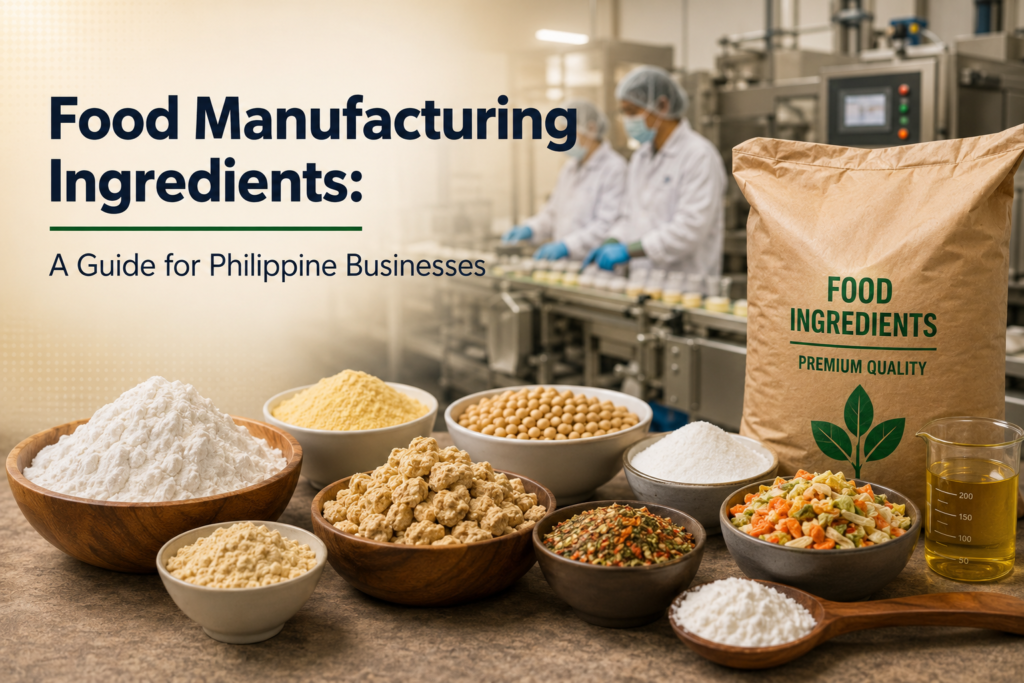
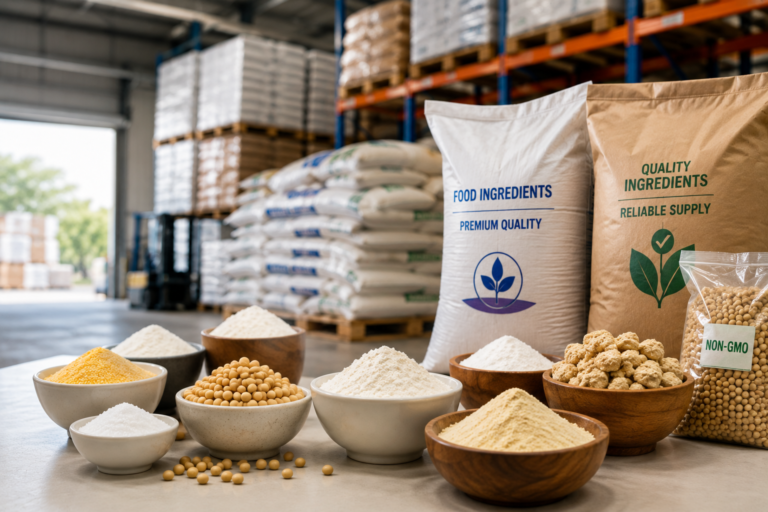
Food ingredients are the foundation of every manufactured food product. From processed meat and sauces to bakery products, seasonings, ready-to-eat meals, and plant-based foods, the ingredients used during production can affect taste, texture, appearance, consistency, shelf life, and overall production cost.
For Philippine food businesses, choosing the right ingredients is not simply about finding the lowest price. Manufacturers need to consider ingredient quality, functionality, availability, storage requirements, supplier reliability, and how each ingredient performs within their specific production process.
This guide explains the common types of food manufacturing ingredients and what Philippine businesses should consider when sourcing them.
What Are Food Manufacturing Ingredients?
Food manufacturing ingredients are raw materials and functional ingredients used to produce commercial food products.
Unlike ingredients purchased for household cooking, manufacturing ingredients are often sourced in larger quantities and selected based on specific technical and production requirements.
Depending on the product, manufacturers may use:
Starches and flours
Soy proteins
Seasonings and spice blends
Binders and functional ingredients
Thickeners and stabilizers
Dehydrated vegetables
Sweeteners
Food-grade oils
Meat-processing ingredients
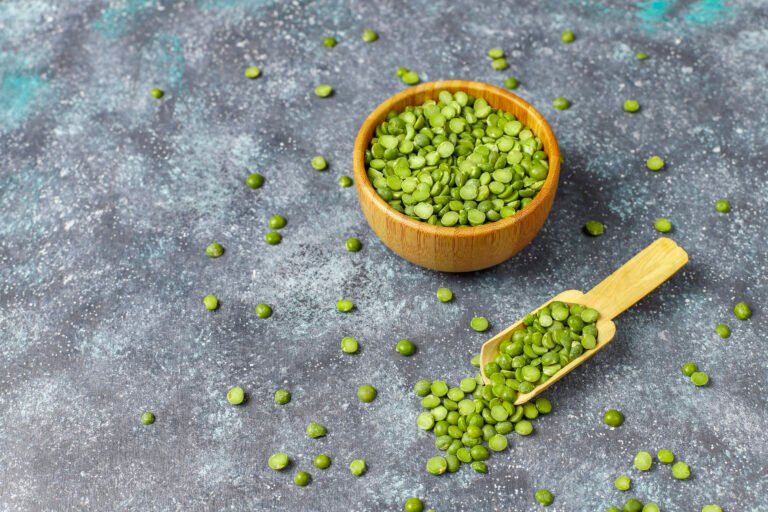
Plant-based ingredients
Other specialty food ingredients
The right combination depends on the formulation, manufacturing process, and characteristics required in the finished product.
Common Food Ingredients Used in Manufacturing
1. Starches
Starches are widely used across the food industry because they can contribute to texture, viscosity, binding, stability, and other functional characteristics.
Common examples include corn starch and tapioca starch.
Depending on the formulation, starches may be used in products such as sauces, processed foods, snacks, meat products, and other prepared foods.
When selecting a starch, manufacturers should consider its intended application and how it performs during processing.
2. Soy Protein
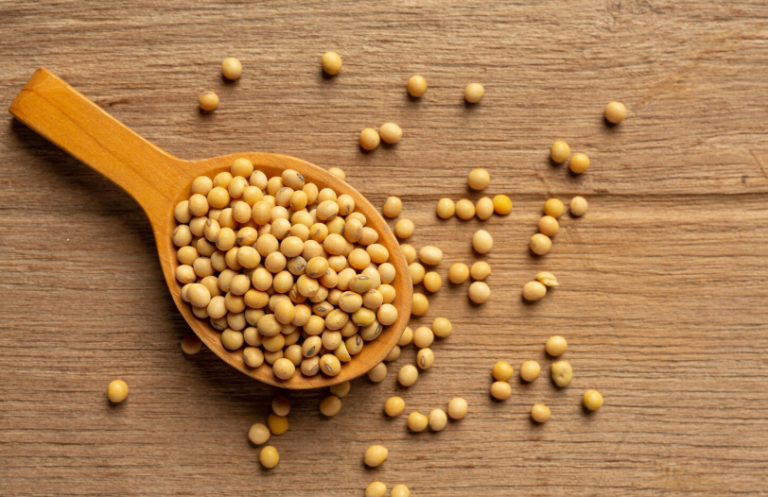
Soy protein is an important ingredient for various food applications.
It can be used to provide protein and may also contribute to texture, water retention, binding, and product yield in suitable formulations.
Soy protein ingredients can be particularly useful for processed meat products and plant-based food applications.
Manufacturers should select the appropriate type and specification based on the desired characteristics of the finished product.
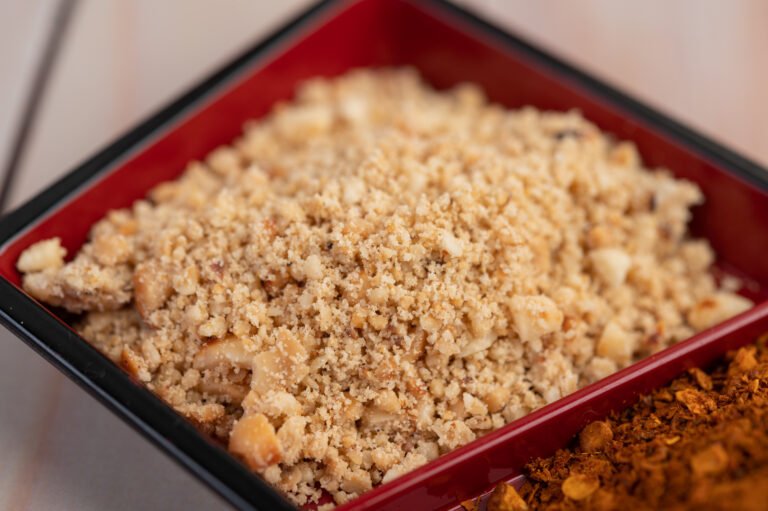
3. Seasonings and Spice Blends
Flavor consistency is important for commercial food production.
Instead of individually measuring numerous spices for every production batch, manufacturers may use prepared seasoning blends designed for specific applications.
Consistent seasoning can help manufacturers maintain a similar flavor profile across production runs.
Seasoning requirements can vary significantly depending on the product, so manufacturers should consider factors such as flavor intensity, application method, dosage, and compatibility with the formulation.
4. Binders
Binders can help improve the structure and consistency of certain food products.
They are particularly relevant in food processing applications where ingredients need to maintain cohesion during mixing, forming, cooking, or handling.
The appropriate binder depends on the formulation and desired finished-product characteristics.
5. Thickeners and Stabilizers
Thickeners and stabilizers can be used to improve consistency, viscosity, suspension, and stability in suitable food products.
They are commonly relevant to applications such as sauces, dressings, beverages, desserts, and processed foods.
The correct ingredient and dosage should be determined according to the formulation and manufacturing process.
6. Dehydrated Ingredients
Dehydrated vegetables and other dried ingredients can provide convenience for commercial food production.
Because much of the moisture has been removed, these ingredients can be easier to store and handle than fresh alternatives in appropriate applications.
Dehydrated ingredients can be used in products such as:
Seasoning mixes
Soups
Sauces
Ready-to-cook products
Processed foods
Foodservice preparations
Manufacturers should always follow the recommended storage and handling requirements for each ingredient.
How Food Ingredients Affect Product Quality
Ingredient selection can have a direct impact on the final product.
For example, changing a starch may affect texture or viscosity. Changing a seasoning blend can alter the flavor profile. Changing a protein ingredient may affect texture, moisture retention, or yield.
This is why manufacturers should avoid selecting ingredients based solely on price.
A more suitable ingredient may provide better performance and consistency, potentially reducing production problems and reformulation requirements.
Choosing Ingredients Based on the Application
One of the most important considerations is the intended application.
The same ingredient category may have multiple grades, specifications, or functional characteristics.
For example, an ingredient suitable for a sauce may not necessarily be the best option for a processed meat application.
Before purchasing an ingredient, manufacturers should identify:
What product will it be used in?
What function should the ingredient provide?
How will the product be processed?
What texture is required?
What flavor profile is required?
What production volume is expected?
What storage conditions are available?
Clearly defining these requirements can make the sourcing process more efficient.
What Philippine Businesses Should Consider When Buying Ingredients
Ingredient Quality and Consistency
Manufacturers need ingredients that perform consistently from one production batch to another.
Inconsistent raw materials can make it difficult to maintain the same taste, texture, appearance, or processing characteristics.
Before purchasing in bulk, businesses should ask suppliers about product specifications, quality-control procedures, and available documentation.
Supplier Reliability
A high-quality ingredient is not useful if it is regularly unavailable when production needs it.
Businesses should consider whether a supplier can provide reliable inventory, reasonable lead times, and consistent fulfillment.
For manufacturers with recurring production schedules, establishing a dependable supply relationship can help reduce procurement disruptions.
Pricing and Total Cost
Ingredient price is important, but businesses should evaluate the overall cost rather than simply choosing the cheapest quotation.
Consider:
A lower-priced ingredient may not necessarily be the most economical option if it produces inconsistent results or requires higher usage.
Minimum Order Quantities
Bulk ingredients are often sold in commercial quantities.
Before ordering, determine whether the minimum order quantity is appropriate for your business.
Purchasing more than your business can reasonably store or use may increase inventory costs and create unnecessary waste.
Shelf Life and Storage
Storage is another important consideration when purchasing food manufacturing ingredients.
Businesses should understand the recommended storage conditions, packaging requirements, shelf life, and inventory rotation procedures for each product.
Proper storage helps preserve ingredient quality and reduces avoidable losses.
Why Supplier Selection Matters
Food manufacturing depends on a consistent supply of raw materials.
A dependable supplier can help businesses manage ingredient procurement while supporting production planning and inventory management.
When evaluating suppliers, consider more than their product catalog. Look at their:
A supplier that understands food manufacturing applications can also be valuable when businesses are developing new products or improving existing formulations.
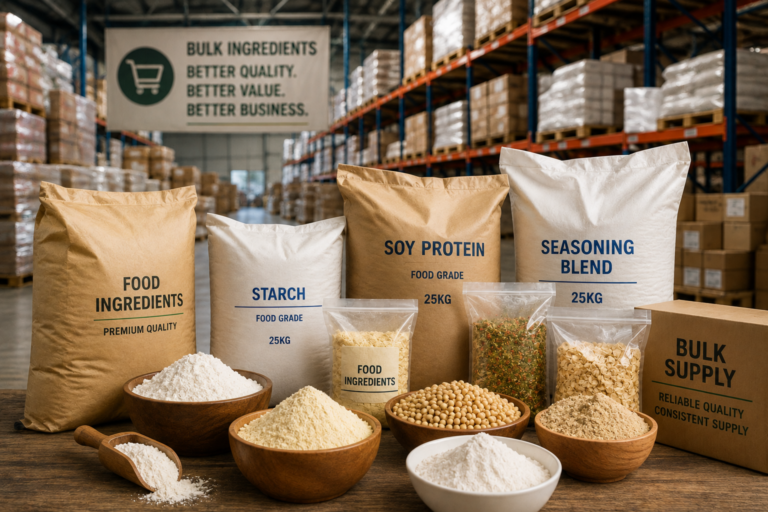
Buying Ingredients in Bulk
Bulk purchasing can make sense for businesses with predictable and consistent ingredient usage.
Potential advantages include:
Lower cost per unit
Fewer purchasing transactions
More predictable inventory
Better production planning
Reduced risk of running out of frequently used ingredients
However, businesses should balance bulk purchasing with storage capacity, shelf life, cash flow, and actual consumption.
The objective is not simply to buy as much as possible. The objective is to maintain an efficient and reliable supply of ingredients.
Ingredients for Different Food Manufacturing Applications
Different industries have different ingredient requirements.
Processed Meat
Processed meat manufacturers may use proteins, binders, starches, seasonings, and other functional ingredients to achieve specific characteristics in products such as sausages, meatballs, patties, and other processed products.
Sauces and Dressings
Sauce manufacturers may require starches, thickeners, stabilizers, seasonings, and other ingredients to achieve the desired consistency and flavor.
Bakery Products
Bakeries and commercial producers may source flour-based ingredients, starches, functional ingredients, sweeteners, and other materials depending on the product.
Ready-to-Eat and Convenience Foods
Manufacturers of prepared foods may require a combination of seasonings, dehydrated ingredients, starches, proteins, and other functional ingredients.
Plant-Based Foods
Plant-based product manufacturers may use soy proteins and other plant-derived ingredients to develop products with specific protein, texture, and formulation characteristics.
Questions to Ask Your Food Ingredient Supplier
Before placing an order, Philippine businesses should consider asking:
What applications is this ingredient designed for?
What are the product specifications?
What packaging sizes are available?
What is the minimum order quantity?
What is the typical lead time?
Is the product consistently available?
What storage conditions are recommended?
What is the shelf life?
Are product samples available for testing?
What supporting product documentation can be provided?
Can the supplier support recurring or larger-volume orders?
These questions can help businesses make more informed purchasing decisions.
Build a Reliable Ingredient Supply Chain
For Philippine food manufacturers, ingredient sourcing should be treated as an important part of production planning.
Choosing suitable ingredients and establishing relationships with dependable suppliers can help businesses maintain product consistency, manage costs, and prepare for changes in production volume.
As a business grows, its ingredient requirements may also change. A supplier that can support larger orders, additional products, and evolving production needs can become a valuable long-term partner.
Choosing the Right Food Manufacturing Ingredients
There is no single ingredient that is right for every food product. The best choice depends on the formulation, manufacturing process, desired product characteristics, and business requirements.
For Philippine businesses, the ideal food ingredient supplier should provide more than products. Manufacturers should look for a supplier that can offer consistent quality, dependable availability, competitive pricing, proper product information, and support for their specific applications.
By taking a more strategic approach to ingredient sourcing, food businesses can build a stronger foundation for consistent production and long-term growth.
Looking for Food Manufacturing Ingredients in the Philippines?
Fudsource supplies food ingredients and solutions for businesses involved in food manufacturing, processing, foodservice, and other commercial food applications.
Whether you are sourcing ingredients for an existing product, improving a formulation, or preparing for larger-scale production, selecting the right ingredients and supplier can make your procurement process more efficient.
Looking for food manufacturing ingredients for your business? Explore Fudsource’s ingredient solutions and contact the team to discuss your requirements.