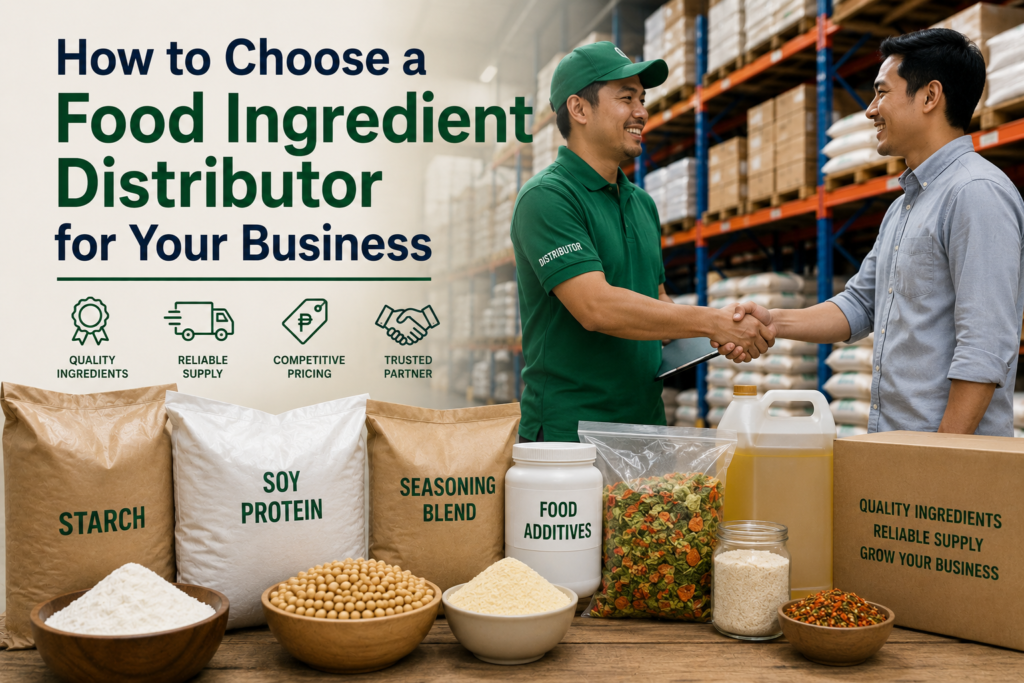
Choosing the right food ingredient distributor is an important decision for restaurants, food manufacturers, processors, foodservice businesses, and other companies that depend on a consistent supply of ingredients.
A distributor does more than deliver products. The right partner can help your business maintain ingredient quality, control procurement costs, avoid supply disruptions, and support your production as it grows.
With many suppliers and distributors available in the Philippines, it is important to evaluate more than just the price of a product.
This guide explains the key factors businesses should consider when choosing a food ingredient distributor.
What Is a Food Ingredient Distributor?
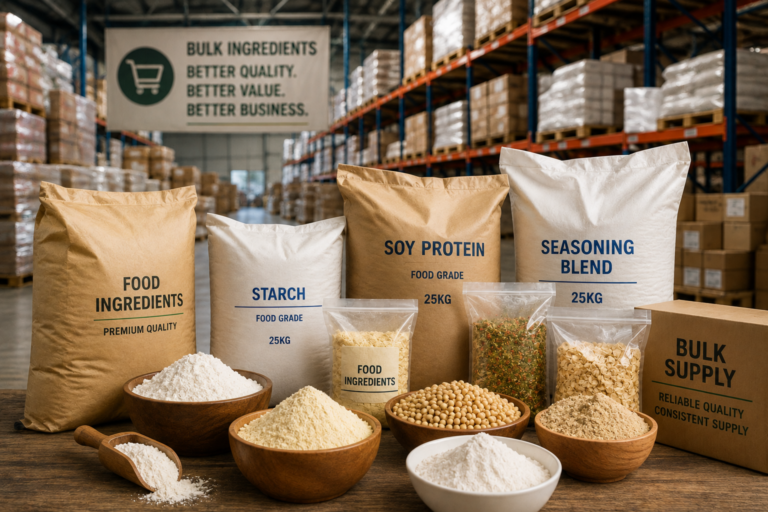
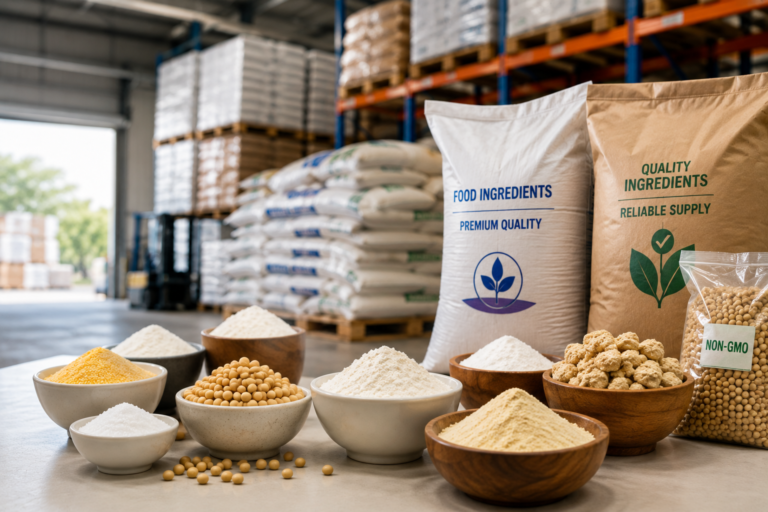
A food ingredient distributor supplies food ingredients and related products to commercial customers. Depending on the distributor, its product range may include starches, proteins, seasonings, dehydrated ingredients, functional ingredients, and other materials used in food production.
Distributors can serve different types of businesses, including:
Food manufacturers
Meat processors
Restaurants
Bakeries
Foodservice companies
Catering businesses
Food product developers
Retail food businesses
For businesses that regularly purchase ingredients in commercial quantities, having a reliable distributor can simplify procurement and inventory planning.
Why Choosing the Right Distributor Matters
Food production depends on having the right ingredients available at the right time.
If an essential ingredient is delayed, unavailable, or inconsistent in quality, it can affect production schedules and the quality of the finished product.
A dependable food ingredient distributor can help businesses:
Maintain a consistent supply of ingredients
Simplify purchasing
Manage recurring orders
Improve inventory planning
Access a wider range of products
Reduce supply-chain risks
Support business growth
The goal should be to find a distributor that can become a reliable part of your supply chain rather than simply a company that offers the lowest quotation.
1. Evaluate the Distributor’s Product Range
Start by looking at the ingredients offered by the distributor.
A supplier with a broad product range may make procurement easier, especially if your business requires several different ingredient categories.
Depending on your application, you may need:
A diverse product portfolio can also be useful when developing new food products or modifying existing formulations.
2. Check Ingredient Quality and Consistency
Quality should be one of the first factors you evaluate.
Food ingredients can affect the flavor, texture, appearance, yield, and processing characteristics of your finished product. If ingredient quality varies between batches, maintaining product consistency can become difficult.
Ask the distributor about:
If you are purchasing an ingredient for the first time, consider requesting a sample for evaluation before committing to a large order.
3. Consider Product Availability
A distributor may offer the right ingredient, but availability is equally important.
Frequent stock shortages can create production delays and force businesses to find replacement ingredients at short notice.
Ask potential distributors:
Is the product regularly stocked?
What is the typical lead time?
How quickly can repeat orders be fulfilled?
Are larger quantities available?
How are supply disruptions handled?
For ingredients that are critical to your production, reliable availability should be a major consideration.
4. Compare Pricing Carefully
Price is an important part of procurement, but it should not be the only deciding factor.
When comparing distributors, look at the total cost of purchasing the ingredient.
Consider:
Price per kilogram
Bulk pricing
Minimum order quantity
Delivery charges
Packaging
Payment terms
Product yield
Ingredient performance
An ingredient with a slightly higher purchase price may provide better value if it performs more consistently or produces better yield.
5. Understand Minimum Order Quantities
Food ingredient distributors may have different minimum order quantities depending on the product.
Before placing an order, make sure the required volume fits your:
Production needs
Storage capacity
Cash flow
Ingredient consumption
Shelf-life requirements
Buying too little can increase procurement frequency, while buying too much can result in excess inventory.
The ideal order quantity should balance cost efficiency with practical inventory management.
6. Check Delivery Coverage and Reliability
Delivery performance can directly affect your operations.
A distributor should be able to deliver ingredients to your location within a reasonable timeframe and according to your production schedule.
When evaluating delivery services, consider:
For businesses with regular production schedules, dependable logistics can be just as important as product quality.
7. Ask About Product Documentation
Commercial food businesses may need product information to support quality-control, procurement, and production processes.
Depending on the ingredient, relevant documentation may include product specifications, certificates of analysis, allergen information, and other supporting documents.
Before ordering, ask the distributor what documentation is available for the products you are considering.
Proper documentation can also make it easier for your quality or production team to evaluate whether an ingredient is appropriate for a particular application.
8. Consider Technical and Application Support
A good food ingredient distributor should understand that different ingredients are used for different purposes.
For example, a starch used in a sauce may have different functional requirements from a starch used in a processed meat application.
Likewise, a protein ingredient may need to meet specific requirements depending on the formulation and processing method.
A distributor with application knowledge can help businesses identify suitable products based on:
Product formulation
Processing method
Desired texture
Moisture requirements
Flavor profile
Production scale
Target cost
This type of support can be particularly useful when developing new products or troubleshooting formulation issues.
9. Evaluate Customer Service
Communication is an important part of any supplier relationship.
You may need to ask about product availability, request a quotation, confirm delivery schedules, or discuss changes to an order.
A responsive distributor can make these processes significantly easier.
Look for a supplier that:
Responds promptly
Provides clear information
Communicates product availability
Gives realistic delivery schedules
Handles issues professionally
Understands your business requirements
Good customer service can become especially valuable when your business experiences unexpected changes in demand.
10. Look for a Distributor That Can Support Growth
Your ingredient requirements may change as your business expands.
A distributor that can supply a small operation may not necessarily have the capacity to support larger production volumes.
Before choosing a long-term partner, consider whether the distributor can accommodate:
Larger orders
Recurring purchases
Additional ingredient categories
New product development
Increased production volumes
Changing delivery requirements
Choosing a distributor with the ability to grow with your business can help avoid unnecessary supplier changes in the future.
11. Consider Storage and Handling Practices
Food ingredients need to be stored and handled appropriately to maintain their quality.
Ask distributors about their storage practices, particularly for ingredients that have specific temperature, moisture, or handling requirements.
Important considerations may include:
Proper storage throughout the supply chain can help preserve ingredient quality until the products reach your facility.
12. Check the Distributor’s Reliability
Before establishing a long-term relationship, evaluate the distributor’s overall reliability.
Look at how they handle:
You can also start with a smaller order to evaluate the distributor’s service before committing to larger recurring purchases.
Food Ingredient Distributor vs. Retail Supplier
Businesses purchasing ingredients for commercial production should consider whether retail suppliers can actually meet their needs.
Retail purchasing may be appropriate for small quantities, but manufacturers and other commercial businesses often require:
A dedicated food ingredient distributor is generally better positioned to support these requirements.
Questions to Ask Before Choosing a Food Ingredient Distributor
Before selecting a distributor, prepare a list of questions to compare potential suppliers.
Here are some useful questions:
What food ingredients do you supply?
What industries and applications do you serve?
What are your minimum order quantities?
Do you offer bulk or volume pricing?
What is your typical lead time?
How often are your products restocked?
Can you provide product samples?
What product documentation is available?
Do you provide delivery to our location?
Can you handle recurring orders?
Can you support increased volumes as our business grows?
Can you provide application or technical assistance?
Comparing suppliers using the same criteria can make the decision much easier.
Common Mistakes When Choosing a Food Ingredient Distributor
Choosing Based Only on Price
The cheapest quotation may not provide the best overall value.
Quality, availability, delivery, and product performance should also be considered.
Buying Too Much Too Soon
Large orders may offer better pricing, but excessive inventory can create storage and cash-flow problems.
Ignoring Lead Times
If an ingredient has a long lead time, failing to plan ahead can result in production interruptions.
Not Testing the Ingredient
For new ingredients, testing a sample before purchasing large quantities can help verify suitability for your formulation.
Failing to Consider Future Growth
A distributor should ideally be capable of supporting your business as your production requirements increase.
Build a Long-Term Supplier Relationship
Once you find a distributor that consistently meets your requirements, building a long-term relationship can provide significant advantages.
A strong supplier relationship can improve communication, simplify recurring orders, and make it easier to plan future purchases.
As your business grows, your distributor can also become a valuable resource when you need additional ingredients or are exploring new product formulations.
Choose a Food Ingredient Distributor That Fits Your Business
The right food ingredient distributor should provide more than products at a competitive price.
Businesses should evaluate quality, availability, pricing, delivery, documentation, customer service, technical knowledge, and long-term supply capability before making a decision.
For Philippine businesses, choosing a reliable local food ingredient partner can help simplify procurement and create a more dependable supply chain.
Whether you operate a food manufacturing facility, meat-processing business, restaurant, bakery, foodservice operation, or growing food brand, the right distributor can help you source the ingredients you need while supporting your production goals.
Looking for a Food Ingredient Distributor in the Philippines?
Fudsource provides food ingredients and solutions for businesses across the food manufacturing, processing, and foodservice industries.
From food processing ingredients to functional ingredients and other commercial food solutions, Fudsource can help businesses identify products based on their specific requirements.
Looking for a reliable food ingredient distributor for your business? Explore Fudsource’s ingredient solutions and contact the team to discuss your requirements.