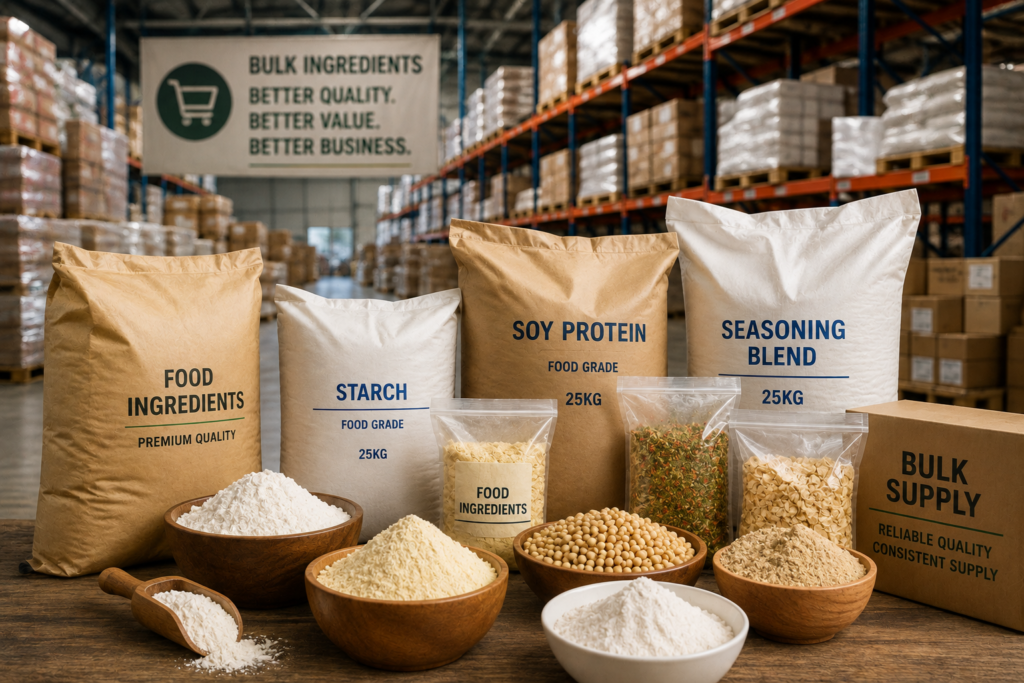
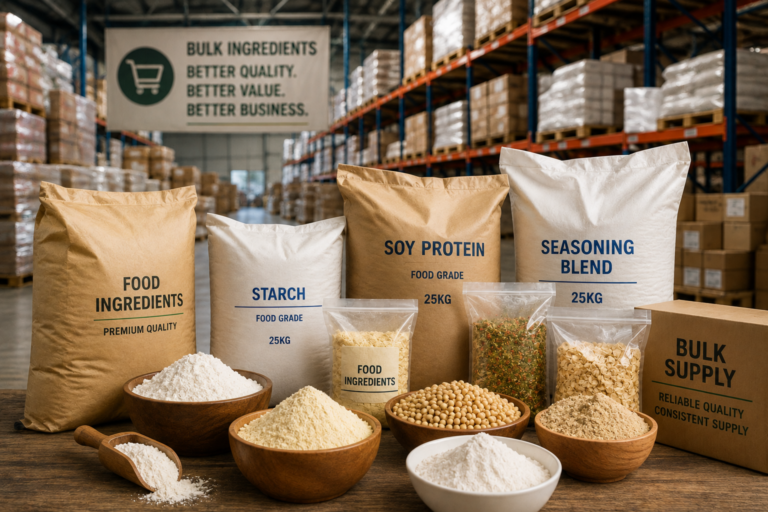
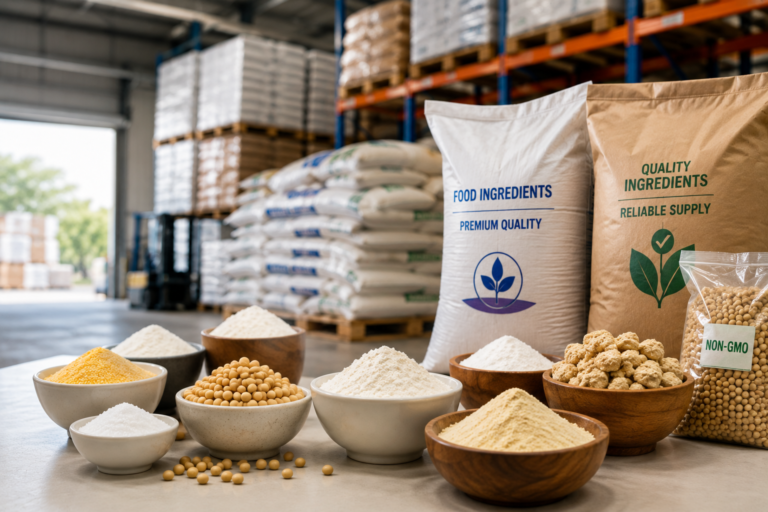
Finding a reliable source for bulk food ingredients is an important part of running a food manufacturing, foodservice, restaurant, or food processing business in the Philippines. When ingredients are purchased in larger quantities, businesses need more than competitive pricing—they also need consistent quality, reliable availability, proper handling, and dependable delivery.
Whether you are producing processed meat, sauces, bakery products, seasonings, ready-to-eat foods, or other commercial products, choosing the right supplier can have a direct impact on your production costs and product consistency.
So, where can businesses buy bulk food ingredients in the Philippines, and what should they consider before placing an order?
Where Can You Buy Bulk Food Ingredients?
Businesses in the Philippines can source bulk food ingredients through several channels, including local food ingredient suppliers, distributors, manufacturers, importers, and specialized B2B suppliers.
For commercial production, working directly with a dedicated food ingredient supplier can provide advantages over purchasing ingredients through retail channels.
A B2B food ingredient supplier may offer:
Bulk quantities
Wholesale pricing
Commercial-grade ingredients
Product specifications
Recurring supply arrangements
Technical assistance
Delivery services
A wider range of food processing ingredients
The right option depends on your production volume, ingredient requirements, budget, and supply schedule.
Why Buy Food Ingredients in Bulk?
Buying ingredients in bulk can provide several benefits for businesses with consistent production requirements.
Lower Cost Per Unit
Wholesale and bulk purchases can reduce the cost per kilogram compared with buying smaller retail quantities.
For manufacturers that use large amounts of an ingredient every month, even a small reduction in cost per kilogram can have a significant impact on overall production expenses.
More Consistent Supply
Maintaining an adequate inventory of essential ingredients can help reduce the risk of production interruptions.
Instead of repeatedly purchasing small quantities, businesses can establish a more predictable procurement schedule based on their production requirements.
Easier Production Planning
Bulk purchasing can make it easier to plan production and manage inventory.
When a business knows approximately how much of an ingredient it needs each month, it can coordinate purchasing schedules with its supplier and reduce last-minute sourcing.
What Types of Bulk Food Ingredients Can Businesses Source?
The ingredients required will vary depending on the type of food business.
Common categories include:
Starches and Thickeners
Starches can be used in a wide range of food applications to improve texture, viscosity, stability, and processing characteristics.
Examples include corn starch, tapioca starch, and other specialty starches.
Soy Proteins
Soy-based ingredients are commonly used in food processing and can help improve texture, water retention, protein content, and product yield in suitable applications.
They can be particularly relevant to processed meat and plant-based food production.
Seasonings and Blends
Commercial food manufacturers often require consistent seasoning blends to maintain the same flavor profile across production batches.
Dehydrated Ingredients
Dehydrated vegetables and other ingredients can provide convenience and longer storage compared with fresh ingredients in appropriate applications.
Binders and Functional Ingredients
Food manufacturers may use binders, stabilizers, emulsifiers, and other functional ingredients to achieve specific characteristics in their finished products.
What Should You Look for in a Bulk Food Ingredient Supplier?
Choosing a supplier should not be based on price alone.
1. Product Quality
Ingredient quality directly affects the quality and consistency of your finished product.
Ask suppliers about product specifications, quality-control procedures, and available documentation before purchasing in large quantities.
2. Consistent Availability
A supplier may offer an excellent product, but it can still create problems if the ingredient is frequently out of stock.
Ask about typical lead times, inventory availability, and whether the supplier can support recurring orders.
3. Competitive Pricing
Compare pricing based on the actual quantity you need.
When evaluating quotations, consider the total cost, including product price, delivery costs, minimum order requirements, and other applicable charges.
4. Minimum Order Quantity
Not every business needs the same volume.
Before ordering, confirm the supplier’s minimum order quantity and determine whether it matches your storage capacity and production requirements.
5. Product Documentation
Commercial food businesses may require documentation to support their internal quality-control and procurement processes.
Depending on the product, ask whether the supplier can provide relevant specifications, certificates, allergen information, or other product documentation.
6. Delivery Capability
Reliable delivery is essential when ingredients are part of a regular production schedule.
Consider whether the supplier can deliver to your location and meet your required delivery schedule.
7. Industry Knowledge
A supplier with knowledge of food manufacturing applications can be more valuable than a supplier that simply sells ingredients.
If you are developing a new product or trying to improve an existing formulation, application knowledge can help you identify ingredients that are suitable for your specific process.
Bulk Food Ingredients for Food Manufacturers
Food manufacturers often have more complex ingredient requirements than restaurants or small food businesses.
Manufacturing operations may require large quantities of ingredients with strict specifications and consistent performance.
For example, a processed meat manufacturer may need ingredients that help with texture, moisture retention, binding, or yield. A sauce manufacturer may require starches, stabilizers, seasonings, or other functional ingredients.
This is why it is important to choose a supplier that understands your application rather than simply comparing prices between different sellers.
How Much Should You Buy?
Buying in bulk does not necessarily mean buying the largest quantity available.
The ideal order size depends on several factors:
A useful approach is to calculate your average monthly consumption and establish an inventory level that provides enough supply without creating unnecessary excess stock.
For ingredients with longer shelf lives and predictable usage, larger orders may make sense. For ingredients with shorter shelf lives or lower consumption, smaller and more frequent orders may be more practical.
Local Supplier vs. Multiple Suppliers
Some businesses purchase different ingredients from several suppliers. While this can provide access to more products, it can also increase procurement complexity.
Working with a reliable supplier that offers multiple ingredient categories may simplify purchasing and communication.
Instead of coordinating several separate orders, businesses may be able to consolidate more of their ingredient requirements through one supplier.
However, businesses should still evaluate each product based on quality, price, availability, and suitability for the intended application.
Questions to Ask Before Placing a Bulk Order
Before purchasing a large quantity of food ingredients, ask the supplier:
Is the ingredient currently available?
What is the minimum order quantity?
What is the price per kilogram or unit?
Is bulk pricing available?
What is the expected lead time?
What are the recommended storage conditions?
What is the product shelf life?
Are product specifications available?
Can samples be provided for testing?
Can the supplier support recurring orders?
Getting clear answers before purchasing can help prevent unexpected costs and supply problems.
Why Reliable Sourcing Matters
Food ingredients are a fundamental part of your production process. A shortage of one essential ingredient can potentially delay an entire production schedule.
Reliable sourcing helps businesses plan inventory, maintain consistent formulations, and reduce the risk of unexpected interruptions.
For growing businesses, establishing a dependable supplier relationship can also make it easier to scale production as demand increases.
Buy Bulk Food Ingredients from a Reliable Philippine Supplier
If you are looking for a bulk food ingredient supplier in the Philippines, choose a supplier that understands the needs of commercial food businesses.
Fudsource provides food ingredients and solutions for food manufacturers, processors, restaurants, foodservice businesses, and other commercial customers. With access to a range of food ingredients, businesses can source products based on their specific production and formulation requirements.
Whether you need ingredients for processed meat, sauces, seasonings, bakery products, or other food applications, having a reliable ingredient partner can help simplify procurement and support consistent production.
Looking for bulk food ingredients for your business? Explore Fudsource’s food ingredient solutions and contact the team to discuss your requirements.