Introduction
Choosing the right food ingredients supplier is one of the most important decisions for any food business. Whether you operate a food manufacturing company, restaurant, bakery, meat processing facility, or food distribution business, the quality of your ingredients directly affects your products, customer satisfaction, and profitability.
With numerous suppliers available in the Philippines, finding the right partner can be challenging. This guide will help you understand the key factors to consider when selecting a food ingredients supplier that can support your business growth and long-term success.
1. Prioritize Product Quality
The quality of your finished products depends heavily on the quality of the ingredients you use. A reliable supplier should consistently provide high-quality ingredients that meet your specifications and industry standards.
Before making a commitment, request product samples and evaluate their performance in your production process. Consistency is equally important. Even minor variations in ingredient quality can affect taste, texture, appearance, and shelf life.
2. Check Food Safety Certifications
Food safety should never be compromised. When evaluating suppliers, verify that they comply with food safety regulations and industry standards.
Look for suppliers that maintain proper quality control systems and can provide documentation related to food safety, product traceability, and regulatory compliance. This helps protect your business and ensures consumer confidence in your products.
3. Evaluate Product Availability
Supply interruptions can lead to production delays, missed deadlines, and lost revenue. Choose a supplier that maintains sufficient inventory and has a dependable supply chain.
Ask about stock availability, lead times, and contingency plans during periods of high demand or supply disruptions. A supplier with strong inventory management can help keep your operations running smoothly.
4. Consider Their Product Range
Working with a supplier that offers a wide range of food ingredients can simplify your procurement process.
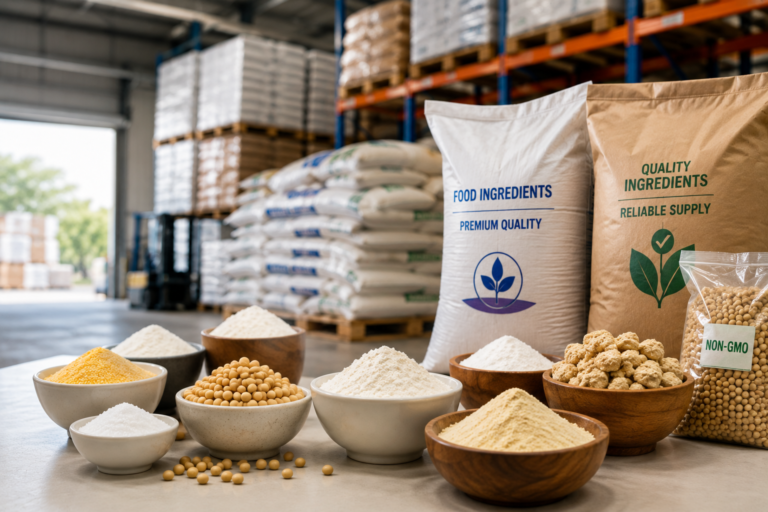
For example, a supplier that provides starches, proteins, oils, seasonings, breadcrumbs, and dehydrated vegetables allows you to source multiple products from a single trusted partner. This can improve efficiency, reduce administrative work, and streamline logistics.
5. Assess Industry Experience
Experience matters in the food industry. Suppliers with extensive industry knowledge understand the challenges faced by food manufacturers and processors.
An experienced supplier can provide valuable recommendations regarding ingredient selection, formulation improvements, and cost optimization strategies that can benefit your business.
6. Review Customer Service and Technical Support
A supplier should be more than just a vendor. They should serve as a business partner who is responsive and committed to helping you succeed.
Reliable customer support ensures that inquiries, orders, and technical concerns are handled efficiently. Strong communication can prevent misunderstandings and reduce delays in your operations.
7. Compare Pricing and Overall Value
While competitive pricing is important, choosing the lowest-cost supplier is not always the best decision.
Consider the overall value offered, including product quality, consistency, delivery reliability, customer support, and technical expertise. A slightly higher price may result in better product performance and fewer operational issues.
8. Check Delivery Reliability
Timely delivery is essential for maintaining production schedules and meeting customer demands.
Ask suppliers about their logistics capabilities, delivery coverage, and order fulfillment performance. Consistent and dependable delivery services can help minimize disruptions and improve operational efficiency.
9. Look for Long-Term Partnership Potential
The best supplier relationships are built on trust, transparency, and mutual growth. Consider whether the supplier can support your future expansion and evolving business needs.
A supplier that understands your goals and provides scalable solutions can become a valuable long-term partner as your business grows.
Conclusion
Selecting the right food ingredients supplier is a strategic decision that impacts product quality, operational efficiency, and business growth. By evaluating factors such as product quality, food safety compliance, inventory reliability, industry experience, customer support, and overall value, you can make an informed decision that benefits your organization.
Partnering with a trusted supplier allows you to focus on what matters most—creating high-quality food products and serving your customers with confidence.
At Fudsource Philippines, we are committed to providing reliable food ingredient solutions that help food businesses achieve consistent quality and sustainable growth.